
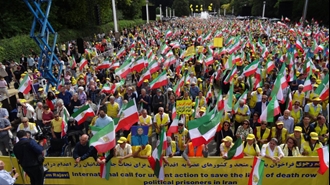
Iran’s crisis is not merely the product of an ineffective administration or mistaken policies. Its central cause is a political structure that has deprived society of meaningful choice and treats every independent form of organization as an existential threat. Discussion of Iran’s future cannot be limited to replacing officials, another temporary agreement, or restoring the former dynasty. The decisive question is which force can transform widespread discontent into a stable democratic transition.
Iranian society faces intense economic, social, and political pressure. Falling purchasing power, structural corruption, unemployment, water scarcity, environmental degradation, discrimination against women, repression of minorities, and the closure of meaningful avenues for reform have widened the gap between the public and the ruling establishment. Yet governmental weakness does not automatically produce collapse. Authoritarian systems can survive extreme unpopularity when they retain a centralized apparatus of repression and their opponents lack an organized alternative.
This exposes the limits of protest that remains entirely spontaneous. Civil protest is indispensable to every democratic movement, but without continuity and organization it remains vulnerable. The authorities can isolate cities, shut down communications, arrest local organizers, infiltrate networks, and impose costs severe enough to exhaust a movement. The problem is not a lack of courage; it is the absence of a mechanism able to convert dispersed courage into durable political power.
Organized resistance fills this vacuum. The MEK’s Resistance Units should not be viewed merely as groups expressing opposition. Their strategic value lies in connecting local protests, transferring experience, countering activists’ isolation, preserving collective memory, and showing that sustained resistance is possible under severe repression. Such networks can link labor strikes, teachers, women, students, and urban neighborhoods. Their broader purpose is to transform isolated actions into a nationwide and continuous process with a defined political direction. Without coordination, each movement may begin courageously yet still be repressed alone.
Organization, however, is not sufficient. Any movement seeking a role in Iran’s future must explain what political order it intends to establish. Maryam Rajavi’s Ten-Point Plan provides measurable principles for the post-theocratic period: free elections, universal suffrage, a republic, separation of religion and state, gender equality, abolition of the death penalty, freedom of expression and association, judicial independence, equal rights and autonomy for ethnic and national communities, abandonment of nuclear weapons, and peaceful international relations.
These principles distinguish a democratic alternative from other claimants to power. Any force committed to popular sovereignty must submit its authority to the free vote of citizens and accept the result. Legitimacy cannot arise from a clerical title, a crown, family lineage, or foreign patronage. A transition should culminate in an elected constituent assembly and universal elections, ensuring that no organization or individual becomes the permanent owner of power.
For the same reason, restoring monarchy is not a solution. Reza Pahlavi entered politics from an inherited position. Many supporters avoid reckoning with repression, torture, one-party rule, and SAVAK, or minimize their significance. Some monarchist circles reproduce symbols, rhetoric, and political behavior difficult to reconcile with democratic culture.
The issue is not only historical. Reducing Iran’s political landscape to a rivalry between Reza Pahlavi and the clerical establishment erases the country’s diversity and marginalizes republican forces. This binary serves the existing government by allowing it to present itself as a barrier against monarchy and exploit fear of the former dictatorship. Monarchist groups, meanwhile, use repression inside Iran and weak independent organization to portray themselves abroad as the only option. This pressures a third force rejecting both dictatorships.
Foreign powers must recognize that lasting stability cannot be achieved through agreements with the present government or by promoting a convenient personality abroad. Western governments have alternated between accommodation and support for opposition figures without an organized domestic base. Both have marginalized the Iranian people.
A realistic policy would recognize Iranians’ right to change their government and support democratic principles without military intervention, external leadership selection, or restoration of monarchy. Democratic transition becomes possible when three elements converge: widespread social discontent, organized resistance inside the country, and a clear program for transferring sovereignty to the people. Iran need not choose between two dictatorships. The alternative is a democratic republic founded on popular sovereignty.