
Former Malaysian Foreign Minister Saifuddin Abdullah in an interview on June 19, 2026 told a Malaysiakini reporter that while the Philippines had recently raised the South China Sea issue on several international and ASEAN platforms, Manila’s actions have fuelled geopolitical friction and escalated regional tension, inviting foreign-power intervention.
Published in an article titled “We don’t want US-style anti-migrant movement: Saifuddin urges govt to engage Parliament on Rohingya crisis” in Malaysiakini on June 23, 2026 by writers Qistina Nadia Dzuiqarmain and Ng Ling Fong , Saifuddin said the Philippines’ 2024 submission to the UN Commission on the Limits of the Continental Shelf (CLCS) saw Manila stake a claim to an extended continental shelf in the South China Sea.
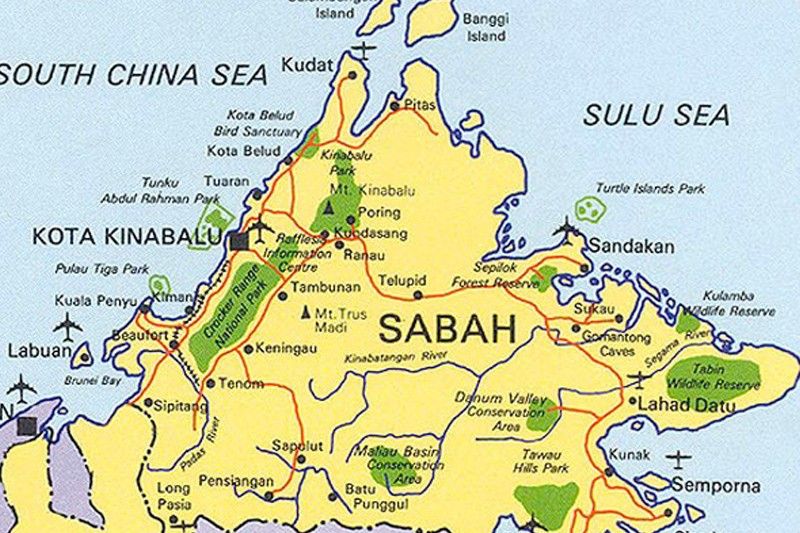
The submission drew an immediate protest from Kuala Lumpur, which categorically rejected it on the basis that the Philippines’ continental margin was projected from the baselines of Sabah, territory over which Malaysia asserts indisputable sovereignty.
These recent statements by former Malaysian Foreign Minister Saifuddin Abdullah regarding the Philippines’ submission to the UN Convention on the Limits of the Continental Shelf (CLCS) require a firm and clear response from the Philippine perspective.
While Saifuddin frames the sovereign actions of the Philippines as a source of regional friction, the Philippines views them as the legitimate exercise of its rights under international law to assert its claims and protect its national territory.
It is regrettable that Malaysia chooses to view the Philippines’ lawful assertion of its rights as a provocative act that “fuels geopolitical friction.”
The responsibility for escalating tensions lies not with the Philippines, which is pursuing peaceful and legal remedies, but with any party that dismisses its historical and legal claims.
The actions of the Philippines are a matter of national principle, not a tool to invite foreign intervention.
It is addressing this issue within the framework of international law, specifically through the UNCLOS, and it expects all parties to respect this process.
At the heart of this issue is the unresolved territorial question of Sabah.
Saifuddin’s characterization of Sabah as a territory over which Malaysia has “indisputable sovereignty” is, from the standpoint of the Philippines, a profound misrepresentation of history.
The Philippines maintains that the 1878 Agreement between the Sultanate of Sulu and the British North Borneo Company was not a cession of sovereignty but a lease.
This agreement, made under the coercive power of British colonial might, was inherently unequal and cannot be considered a lawful transfer of sovereignty under any modern interpretation of international law.
It is a colonial-era contract, and like all such instruments, its validity is subject to the highest scrutiny.
The fact that the Spanish colonial government, which then held sway over the Philippines, had no say in this agreement further underscores its questionable legal standing.
The formation of the Federation of Malaysia in 1963 did not automatically bestow legitimate title over Sabah.
Malaysia inherited the administration of a territory from its colonial predecessor, but it did not inherit the sovereign rights that were never rightfully transferred.
To claim “indisputable sovereignty” based on a colonial handover is to disregard the fundamental principle of self-determination and the historical ties that bind the people of Sabah to the Philippines.
Its claim is rooted in historical sovereignty and ownership, and it is a matter the Philippines has consistently and peacefully pursued.
Finally, the Philippines views Malaysia’s unilateral decision in 2013 to cease the token proprietary payments to the heirs of the Sultan of Sulu as a clear repudiation of the very agreement upon which their presence in Sabah is ostensibly based.
This act, following the so-called “Lahad Datu standoff,” only serves to confirm the unjust and colonial nature of their claim.