
INQUIRER GRAPHIC BY JANNAYA BARRION
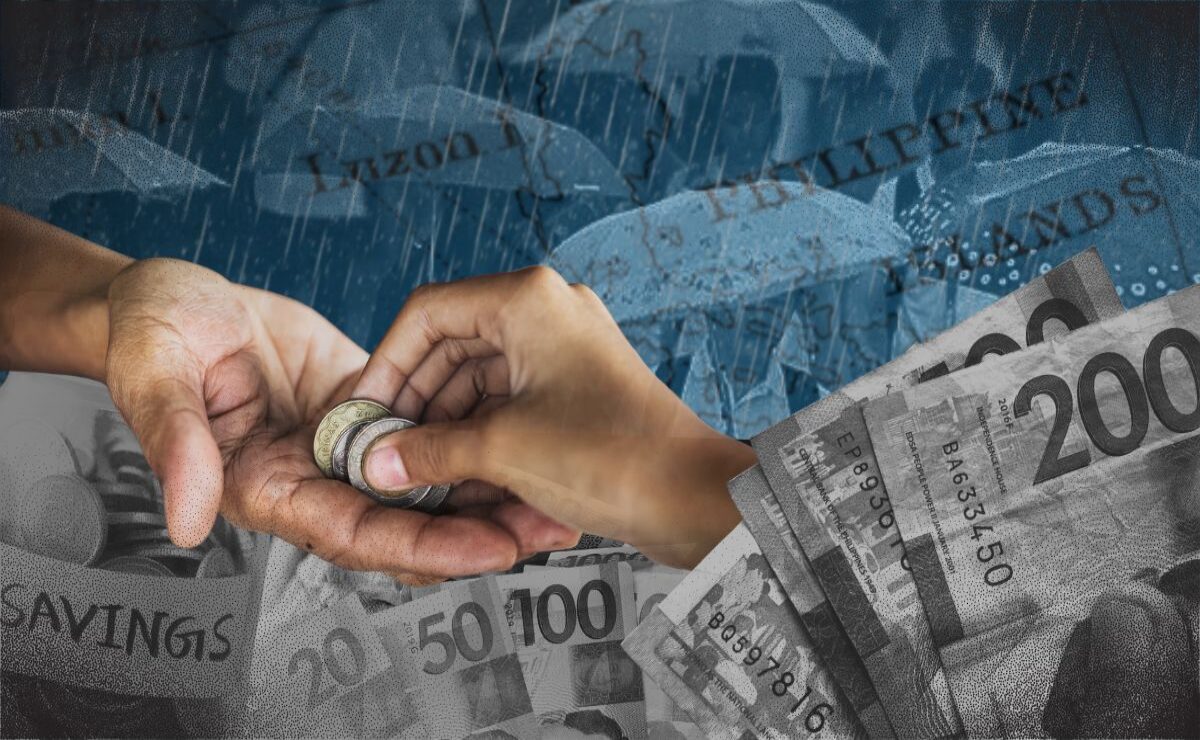
MANILA, Philippines — For many Filipino households, the savings that could help them recover from a disaster may already be dwindling.
The Bangko Sentral ng Pilipinas’ (BSP) Consumer Expectations Survey showed that households’ intention to save dropped sharply in the second quarter of 2026, months before the southwest monsoon and a series of typhoons brought prolonged rains and flooding.
The Saving Intention Index fell to -0.7 from 12.4 in the first quarter, said Dr. Alicor Panao, Inquirer data scientist and University of the Philippines associate professor, in an analysis of BSP data.
Panao said the index had been deeply negative for most of 2022 to 2024 before improving through 2025 and turning positive late last year. The optimism continued into early 2026, only to reverse after the first three months.
The survey predates the series of weather systems that brought days of intense rain and widespread flooding this month, “so it cannot tell us how the disasters affected household savings.”
“However, it shows the financial position of families before the rains came,” he said, pointing out that poorer families are entering disasters with the thinnest savings cushion and will also be the least able to rebuild it after losing income, property or possessions.
Panao stressed that when the waters recede, the harder question is where to get the resources to rebuild when there is barely anything left to save.
Those affected — nearly 1.1 million households — live in Metro Manila, the Cordillera Administrative Region, Ilocos Region, Cagayan Valley, Central Luzon, Calabarzon, Mimaropa, Bicol Region, Western Visayas and the Zamboanga Peninsula.
Panao said higher household costs may have helped reverse last year’s recovery in the Saving Intention Index from negative to positive. He said the oil shock associated with the Middle East war pushed oil prices higher, with consequences extending beyond the gas pump.
“More expensive fuel raises transport costs and can feed into the prices of food, energy, and other necessities,” he said. “For households already working with tight budgets, there is simply little left to put away after paying for everyday needs.”
“That is a 30-point difference,” he said.